Lift CAO
A private aviation company needed a faster way to build aircraft documents, manage listings, and serve partners under their own brands. So we built the software to do it.
Who They Are
Lift CAO is a private aviation company based in Indiana, specializing in aircraft sales, brokerage, and management.
Led by Chief Aviation Officer Casey Blake, alongside Business Operations Officer Josh Holstein, Lift works in a market that’s heavily dependent on information. Aircraft buyers need easy access to accurate specifications, current market data, and professional documentation to make informed decisions.
That means a spec sheet or market evaluation is a crucial part of the sales process. It needs to be accurate, polished, and ready when the client needs it.
Lift CAO was spending too much time building documents that should have been easier to produce.
Every aircraft needed a spec sheet. Market evaluations required pulling numbers and pricing information from several sources, then organizing everything into a professional presentation. The process worked, but it was manual, time-consuming, and difficult to repeat consistently.
Lift also wanted a better way to share those documents, track engagement, and keep its aircraft listings current without relying on individual website updates.
Then the project gained another requirement.
A partner operator wanted Lift to provide the same services under its own branding. That meant the system could not be built for Lift alone. It needed to serve multiple organizations, each with its own identity, but without mixing their documents or information.
What started as a document problem had become a software problem.
What Success Looks Like
The goal was to build a custom platform that gave Lift control over its documents, publishing, and partner services.
The project needed to:
- 01Make aircraft spec sheets and market evaluations faster to create.
- 02Import aircraft specifications and market data instead of entering everything manually.
- 03Produce professional, consistent documents with accurate PDF exports.
- 04Give Lift control over document publishing and revisions.
- 05Track when shared documents were viewed or downloaded.
- 06Connect published aircraft spec sheets directly to liftcao.com.
- 07Support partner organizations with their own branding, users, and documents.
- 08Give the team a practical system they could manage themselves.

Strategy
The approach was to build one system that could handle all the work from start to finish.
Lift did not need another document template or a collection of disconnected tools. They needed a place where the team could create a document, review it, publish it, share it, and manage what happened afterward.
That meant bringing document creation, market data, PDF generation, website inventory, and client sharing into one platform.
The software also had to be flexible. Lift needed control over the details of each document without having to fight the layout. And with partner operators entering the picture, the platform needed to support different brands without requiring a separate application for every company.
A few principles guided the build:
- Make repetitive work faster without sacrificing control.
- Give documents a consistent, professional presentation.
- Keep drafts private until they are ready to publish.
- Make client engagement visible without unnecessary data collection.
- Support multiple brands through one secure system.
- Connect documents directly to the aircraft inventory on Lift’s website.
Custom Document Creator
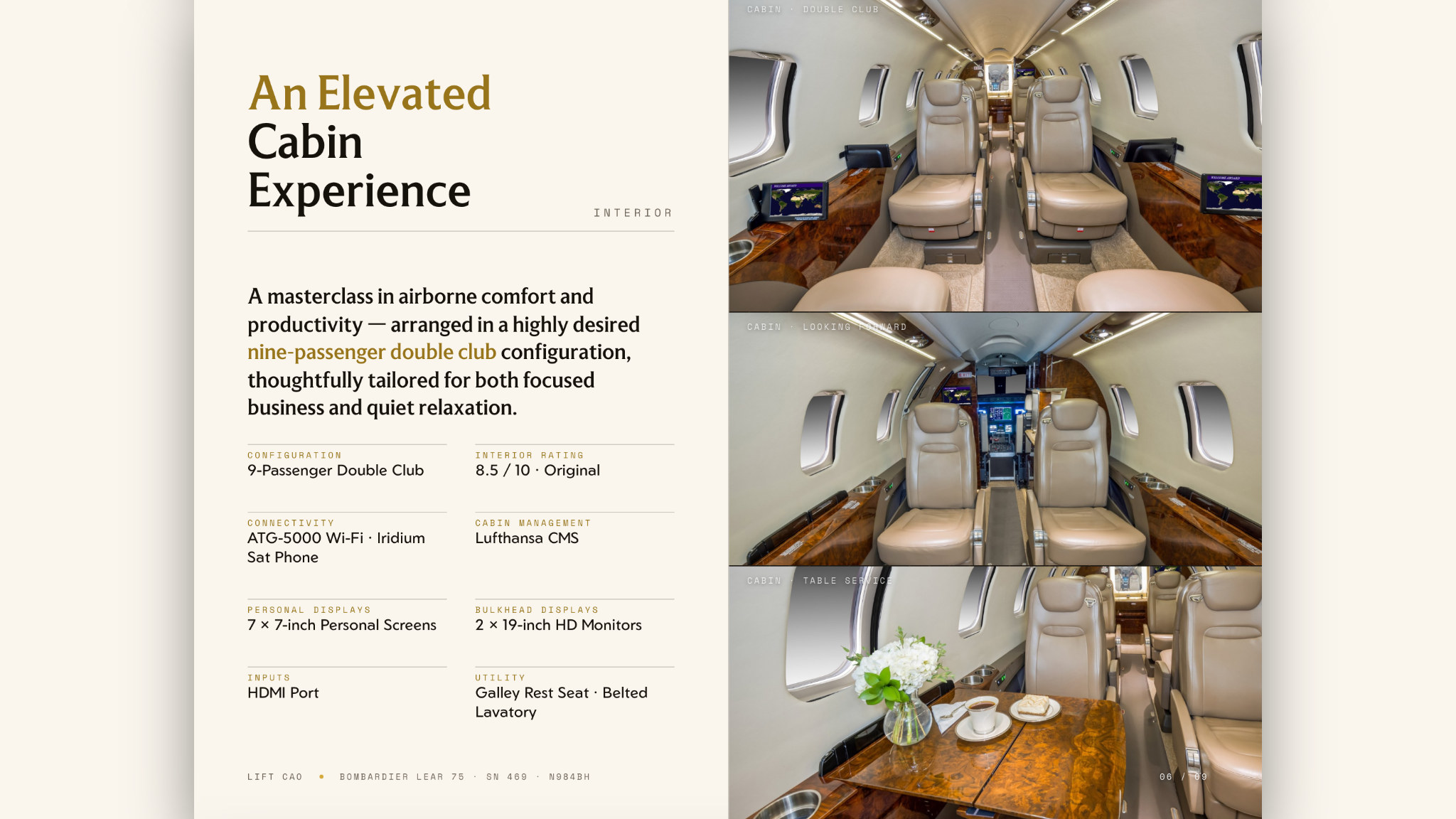
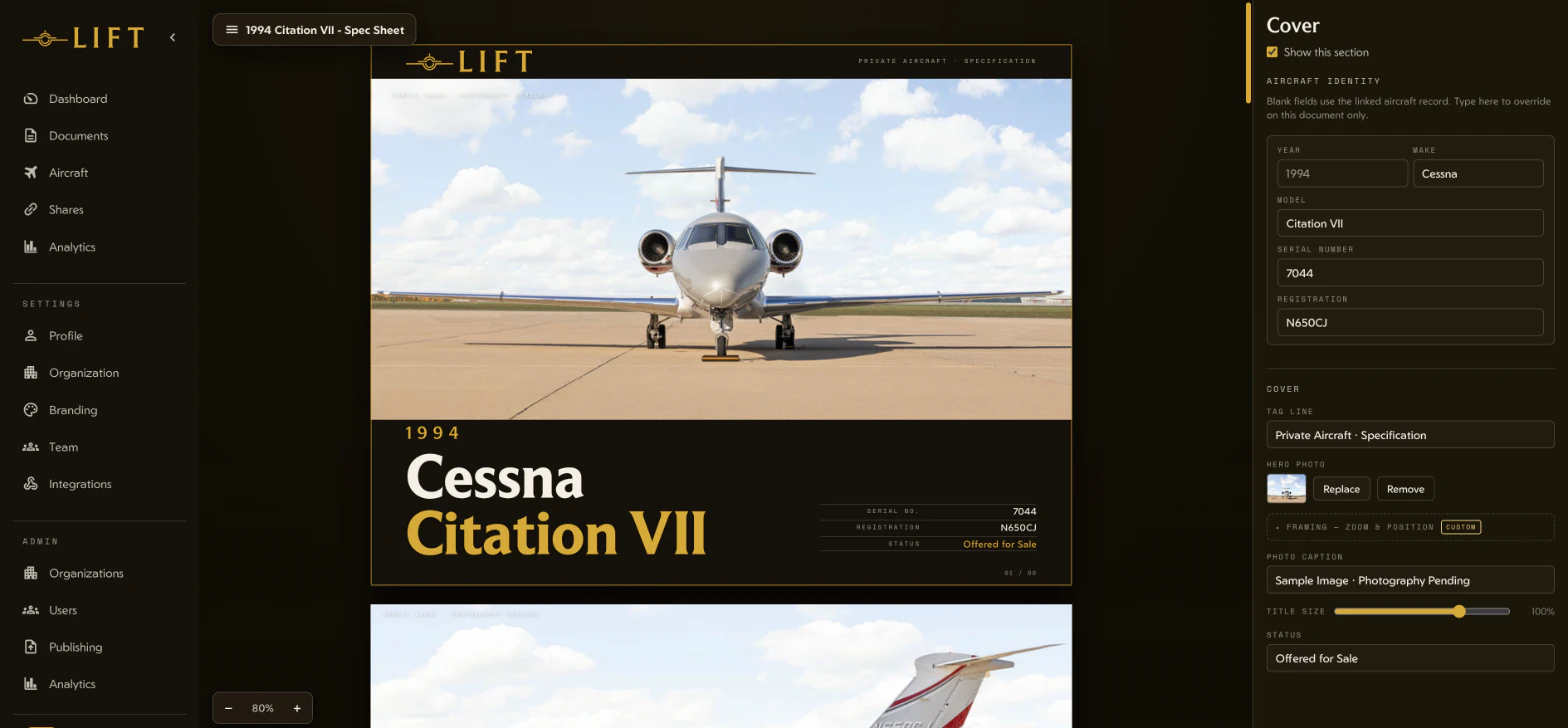
We designed and built the Lift CAO Document Creator, a custom web application hosted at create.liftcao.com.
The platform gives Lift’s team dedicated templates for aircraft spec sheets and market evaluations, with a page-by-page editor and live preview. Instead of building every document from scratch, staff can work within a consistent layout while still controlling the details.
Images can be zoomed and repositioned. List items can be added or reordered. Video and virtual tour links can be included where needed.
The goal was to make document creation straightforward without stripping away the flexibility needed for high-value aircraft presentations.
Data Import and PDF Generation
Market evaluations were one of the biggest opportunities to save time.
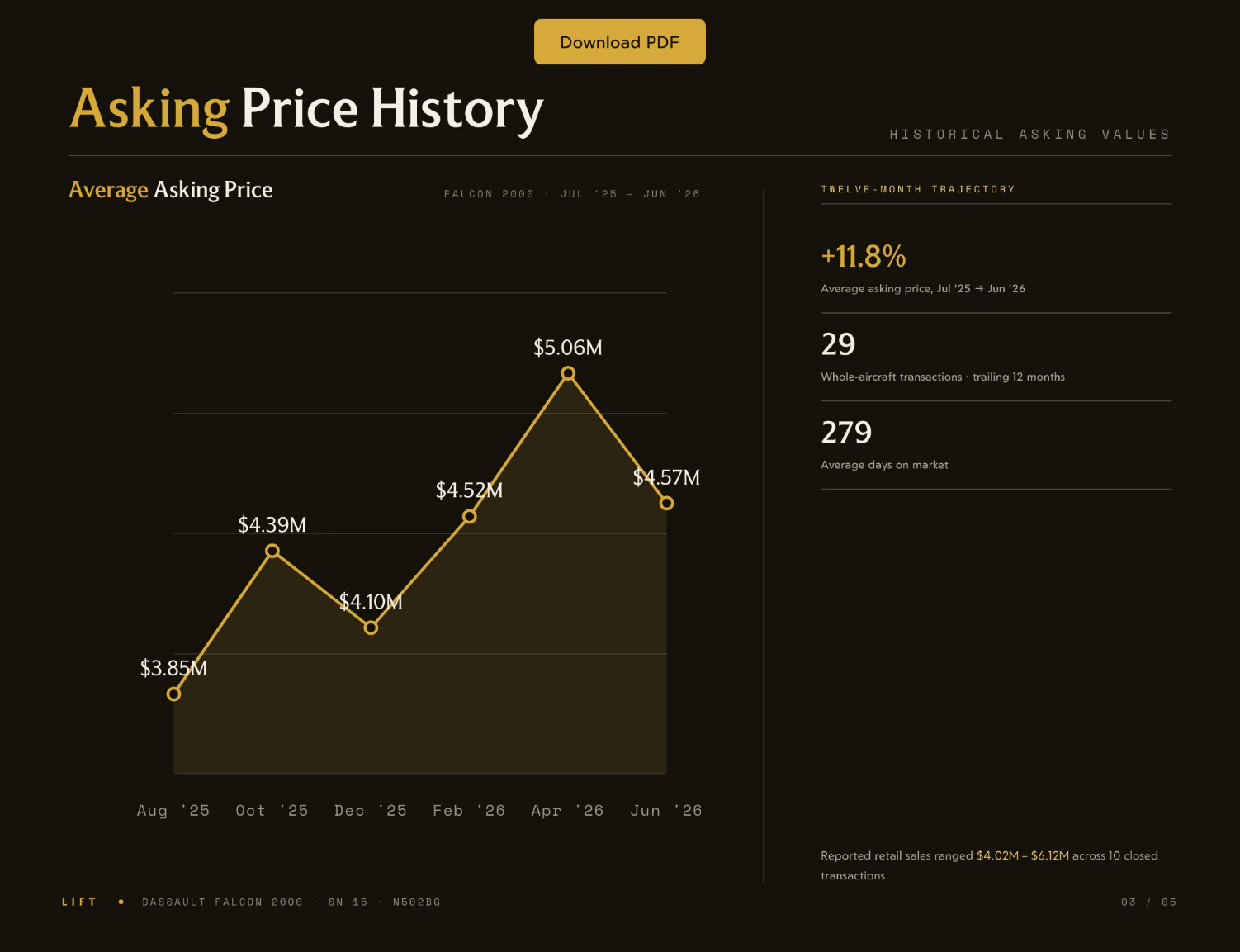
Previously, Lift had to gather market information from multiple sources and assemble it manually. We built an import process that takes a JetNet market export and uses it to populate market figures and pricing history charts.
The same approach applies to aircraft specifications. A JetNet spec report can populate a spec sheet, giving the team a starting point without having to reenter the information.
We also built the PDF export around the same layout used in the editor. What the team sees in the preview is what appears in the finished PDF, including clickable links.
Less manual assembly and fewer disconnected steps leaves more time for the actual work of selling aircraft.
Publishing and Client Engagement
Creating the documents was only half the problem. Lift also needed a better way to distribute and manage them.
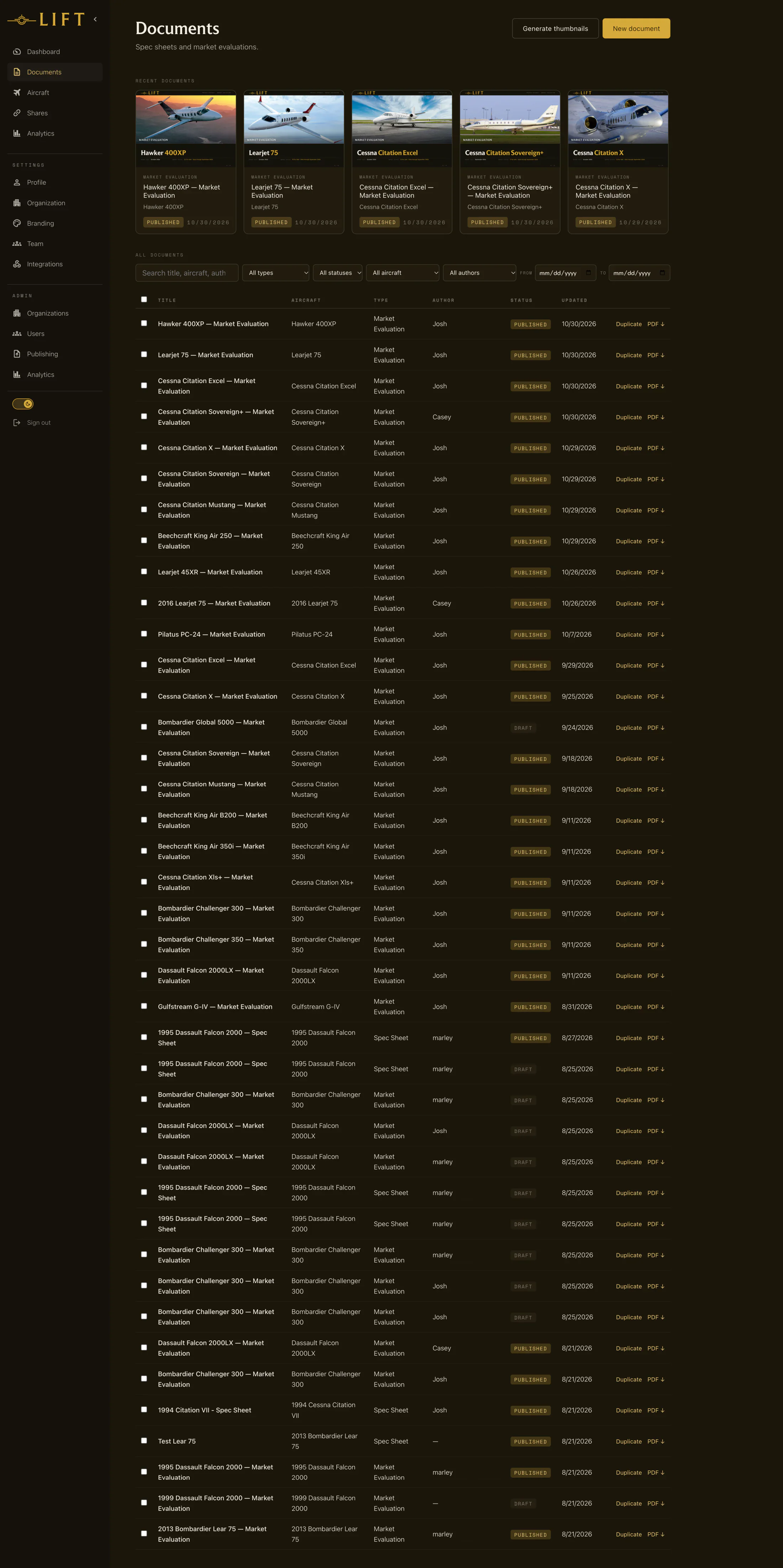
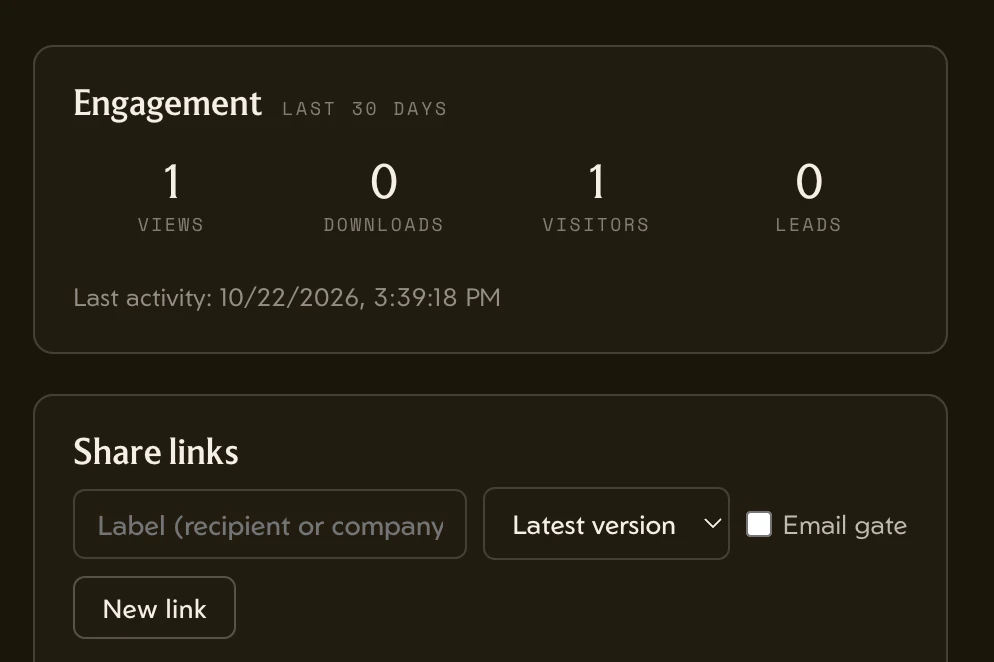
We built a publishing system that separates working drafts from the versions clients can see. Documents can be revised internally without changing the published version. When a new version is ready, publishing it updates every active share link.
Those links also track views and downloads, giving Lift a better understanding of when clients engage with a document. An optional email gate adds another way to identify interested prospects, while visitor tracking avoids storing IP addresses.
The result is a cleaner process for sharing professional documents without losing control over what clients receive.
White-Label Partner System
The project went beyond Lift’s own brand when a partner operator wanted to offer the same documents under its own name.
Rather than building a separate tool, our team developed a multi-tenant system that supports multiple organizations within one application.
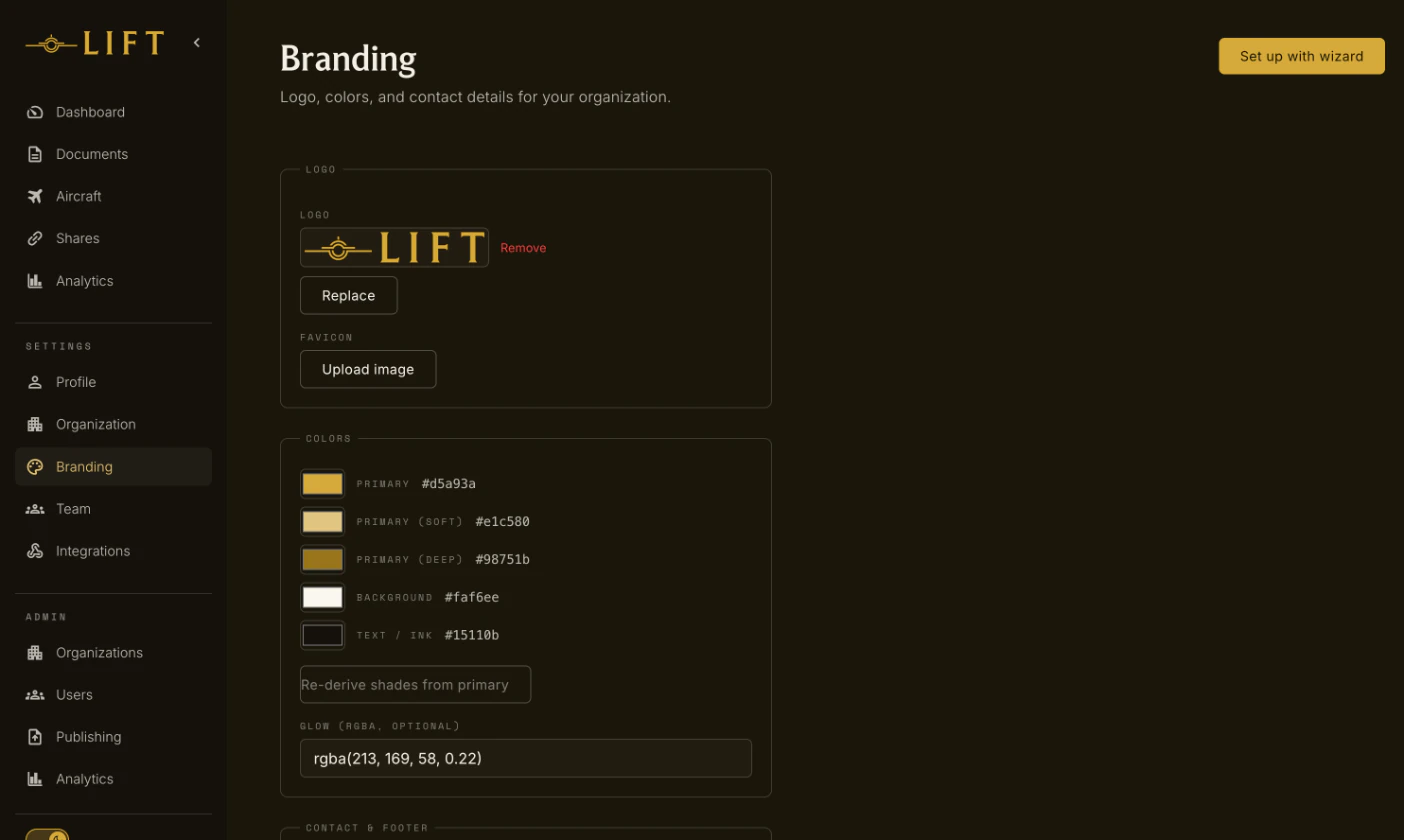
Each organization can have its own logo, colors, heading font, contact information, and team. Database access rules keep each organization’s information separate.
Lift’s administrators can also copy an existing document into a partner organization, where it takes on that organization’s branding.
This gave Lift a way to offer its documentation services to other aviation businesses without rebuilding the process for every partner.
Website Inventory Integration
The Document Creator also connects directly to Lift’s existing website.
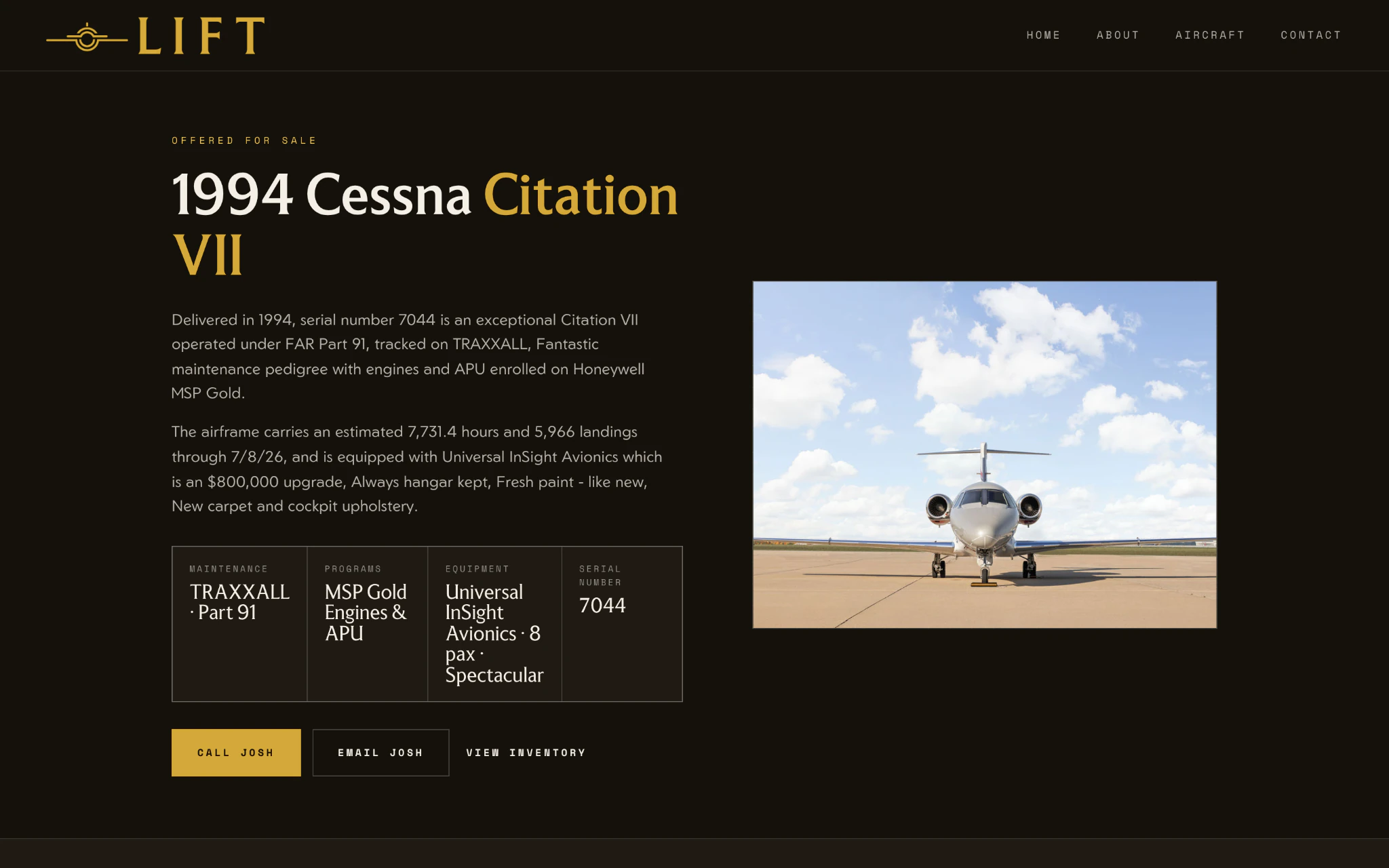
When Lift publishes an aircraft spec sheet to liftcao.com, the aircraft appears in the website’s available inventory. When the listing is unpublished, it comes down.
That removed a separate step from the process. The team no longer needs to prepare a document and then request an individual website update to add or remove the aircraft.
The document becomes the source for the listing, keeping the website connected to what the team is actually publishing.
Deliverables
Together, these features gave Lift CAO a single platform for building documents, managing aircraft information, and supporting partner organizations.
Impact
Lift CAO now has a document system built around the way its team actually works.
- Jul 13, 2026The Lift team begins using the Document Creator.
- Jul 24, 2026The application moves to its dedicated address, create.liftcao.com.
- By end of AugA Citation VII spec sheet, plus market evaluations for a Challenger 300 and a Gulfstream G-IV, built on the new platform.
- Oct 2026The first white-label documents for a partner operator, in its own branding, on the day its organization was set up.
Market evaluations now start with a file upload instead of manually gathering numbers. Aircraft listings can be published or removed from liftcao.com without separate website updates. Documents can be shared with engagement tracking, while ongoing edits stay private until publication.
The result is more than a faster way to produce PDFs. Lift now has a working platform that connects documentation, sales activity, aircraft inventory, and partner services.
What used to require several separate processes now happens all in one place.
“You’ve done a really nice job brother, congrats and thank you for your hard work!”
What We Learned
Custom software should solve real work
The Document Creator was not built around features for their own sake. Each major function addressed a practical problem in Lift’s existing workflow.
One source of information beats repeated entry
By connecting imported data, published documents, and website inventory, Lift can manage more of its work without repeating the same steps.
Publishing needs control
Version history and published-only sharing let the team refine documents internally without exposing unfinished changes to clients.
White-label systems create new opportunities
Supporting multiple organizations gave Lift the ability to provide its document services under partner brands without maintaining separate applications.
Good software grows with the business
The platform started with aircraft documents and grew into a broader tool for inventory management, client engagement, and partner services.
What We Did
Custom Software Design & Development
- Web application development
- Custom document editor
- Live document preview
- PDF generation
- User experience design
Data & Workflow Automation
- JetNet data import
- Market evaluation automation
- Pricing history visualization
- Aircraft specification import
- Workflow optimization
Publishing & Client Engagement
- Document publishing system
- Version history
- Share link management
- View and download tracking
- Email-gated access
White-Label Platform
- Multi-tenant architecture
- Custom organization branding
- Organization and user management
- Database access controls
Website Integration & Project Support
- Aircraft inventory integration
- Website publishing automation
- Software strategy
- Project management